W.G. Maples Cycles
2 High Street
Lincoln
Lincolnshire
UK
LN5 8BQ
Henry Baldock, saddler, formerly used the premises in 1910 and Fred Young, Motor Engineer followed in 1919.
William H E (Billy) and Elizabeth Smart lived in a house at Church Drive, which had a substantial mortgage on it, it was sold, and we took over a cycle and hardware business at 2, High Street. The former owner Fred Young was going into new, larger premises, and plunging into motor-cars.
Two High Street was a gaunt, three-storey house with a dank cellar, a shop front with petrol pump, and at the back a former stable which was used as a workshop. There was little comfort or amenity about the place. In spite of this Dave Currie begged to stay with us, and was with us for a year or two before returning to Scotland. There was a little man who lived in South Bar Square (now built over) just opposite who had been out of work for years, and asked if he could come to our house to mend his boots. His tiny cottage wasn't sufficiently well-lit to see by, and he sat on the kitchen floor working at his last. Dave, I remember, sat watching him for some time, and then climbed the stairs to his top-floor room. He came back after a while and thrust a pound note into the man's hand. "The puir wee devil," he said afterwards, "I couldna stand the sight of it..."
The move also meant a change of school for me, and I was presented at Sincil Bank School, where, hedging my bet, I elected to know rather fewer multiplication tables than I had in fact learned. There was some professional 'tut-tutting' about the standard of primary education at Boultham, but I managed to get into a class not renowned for its academic prowess, but blessed with a great teacher Mr. Watson affectionately known as 'Soapie' who instilled into me by his frequent histrionic readings of Dickens, a real love of reading. He had a carefully groomed and waxed moustache which positively sparked as he leapt over a desk, book in hand, to convey the spirit of some exciting incident.
Two High Street—although I did not appreciate it until later—was on an historic site, a few feet from the Sincil Dyke which ran under High Street, and the precise site of the old South Bar, the mediaeval southern gate of the sprawling city in the days when control of ribbon development had not been thought of to prevent the main road down through St Botolph's parish from being built up. It was here, in 1217, that the survivors of the Battle of Lincoln, in which the Dauphin made his last bid to win the English crown, were confronted by a stout city gate which opened inwards. The press of fleeing men-at-arms effectively closed the gate, and there was a terrible slaughter. Within a few hundred yards is the site of the old leper hospital, the Malandry, where your mother attended South Park High School. The mediaeval boundaries of the Malandry are still indicated by modern fencing. Nearby was the junction with the old heath road, Cross O'Cliff Hill, so named after the cross which marked one of the resting places of Queen Eleanor's body on its journey to London. Extract from the Memoirs of James Henry Evans Smart son of William & Elizabeth Smart from around 1925/1926
In 1946, William H E (Billy) Smart was retiring and offered my father Cecil Edwin Smith his cycle business at number two High Street, Lincoln. This property was in a good position and was a thriving business next to St. Botolph’s Post Office near South Park. William and Elizabeth Smart conveniently lived in Altham Terrace.
To raise the asking price of the shop would have meant selling the relatively new house Cecil was buying in Western Crescent, for which he had paid just over £500. Accommodation at 2 High Street was poor. The front room, dining room and cellar formed the business premises leaving only a small back room and two rooms upstairs. Cecil, having a wife and two children aged 8 and 3 decided not to take up the offer and told his friend Bill Maples about the shop.
The premises still had a petrol pump, to sell ROP (Russian Oil Products) petrol at one shilling and eleven pence a gallon, (less than 10p) over the pavement. As this proved to be inaccurate by Weights and Measures it was never used again.
Bill had recently been left a substantial amount of money by an aunt and had recently been demobilised from the Lincolnshire Regiment having returned from two years in the Arctic. It was just the opportunity Bill had been looking for and he bought the premises and opened for business on June 1st. 1946. At this time Jack Bird was employed in the workshop at the rear of the shop; access was up a narrow passage in Bargate. The neighbours were Harry Barnett at the Post Office, number 1, with his assistant Miss Cheeseman. At number 3 High St. was Smithson's sweetshop and the Greenwood family lived in the house. Cecil Smith carried on as Bill Maples mechanic.
In 1948 following, a divorce Cecil was given custody of the two children, Margaret now aged 10 and Paul only 5. This was unusual as the father was rarely given custody. Cecil was driving a taxi for Skerritt’s at this time working long, unsociable hours. He clearly could not manage the job and the children even with the help of his mother and sisters. Bill Maples offered Cecil a job helping in the shop but mainly carrying out the repairs in the workshop at the rear of the premises. Bill retired and sold the shop to Lincoln Wheelers CC member Ray Inkley in October 1980. When Bill died I wrote an obituary for the Echo which was edited by Bette Vickers. Paul Smith 2012
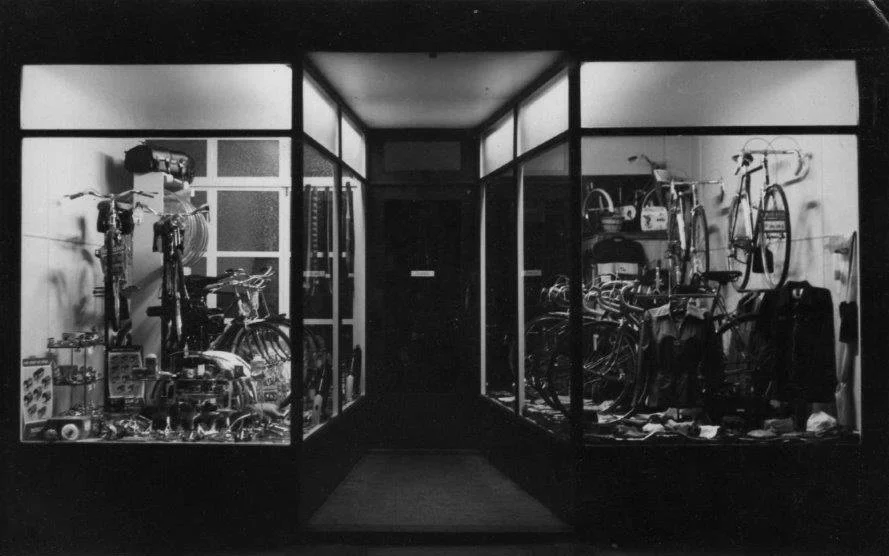
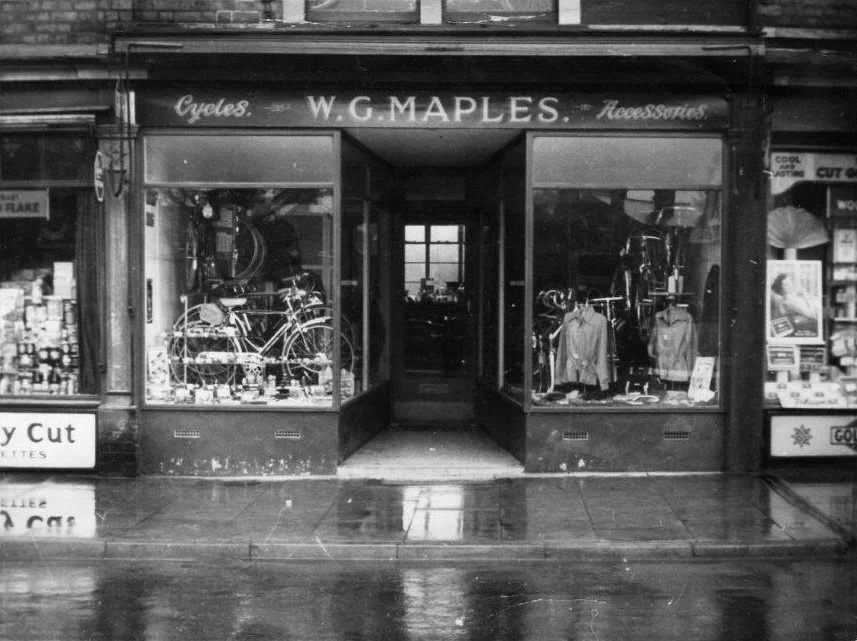
The shop was put up for sale by Ray Inkley and bought by Adrian Taylor and Robert Jackson September 1997. They set up a Car Audio Business which is still the case as of today. The large Glass front that formed the shop entrance was taken down to increase the floor space. There were 2 old sheds at the back of the shop which were removed and the yard concreted. The back wall of the yard was knocked down to allow a pair of big green gates to be fitted allowing vehicular access to the yard. All of the windows were replaced with UPVC apart from the two upstairs sash windows and the shop front windows which are still original with the frosted panel at the top as shown in the photos from the 1950’s.
Internally a workshop was built at the back of the shop and a counter in front of that. The old office in the out building and kitchen the with its Belfast sink were removed to make one larger kitchen. The property still has its outside toilet and shed at the back of the yard with some of the original racking from its days as a bicycle shop.
The Cellar still floods occasionally with up to 6 inches of water although that has only happened once in the time we have owned it. Evident are the cut off pipes that ran to a petrol pump at the front of the shop which we are trying to find information about. There was a tank in the yard at the rear from which the pipes fed the pump via the pipes in the cellar.
Currently we are changing the upstairs building a flat with a kitchen and bathroom in the back room which is nearly complete. We have exposed some of the old wooden lintels that supported the brickwork above the doors. It still has the two small rooms on the top floor which the floors strangely slant to one side. Also a strange walk in cupboard over the stair case.
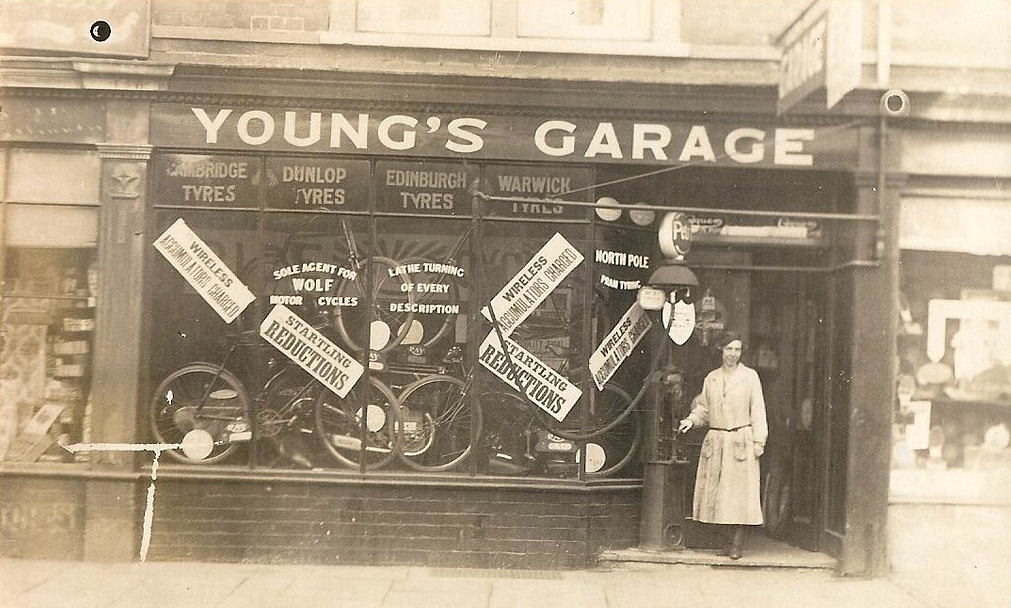
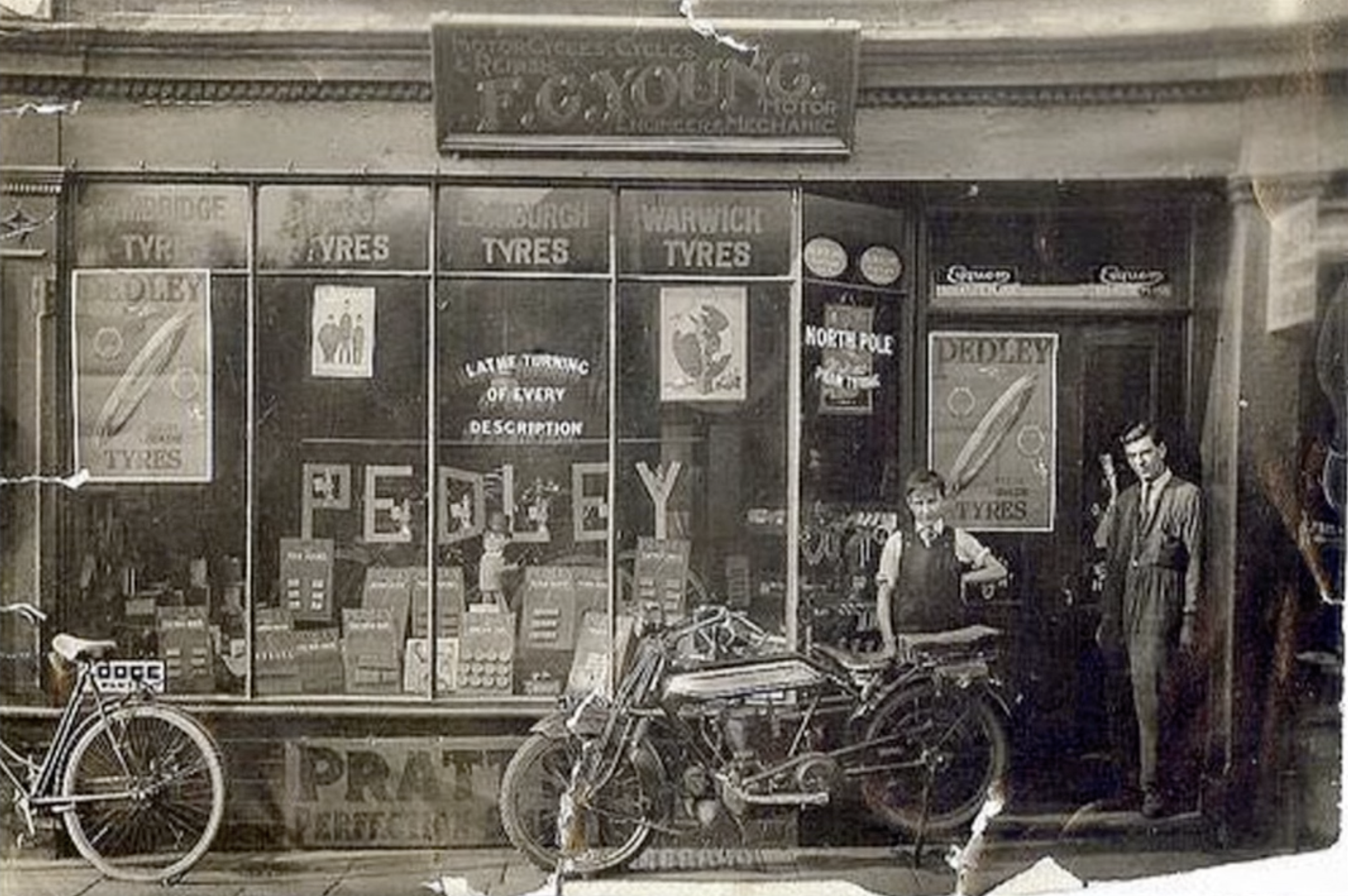
Fred Young’s Garage in 1920
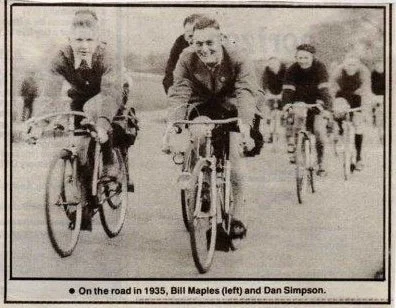
Bill Maples in 1935
OBITUARY | Compiled by Bette Vickers
Tribute to a ‘cycling pioneer’
Mr Bill Maples
Mr Bill Maples — Pioneering cycling enthusiast. Born 23.4.1918. Died 24.1.1996.
THE name of Bill Maples is synonymous with cycling throughout the county and further afield. Mr Maples, who was born in Lincoln, died in St George's Hospital, Lincoln. He was educated at the Lincoln City School Monks Road and started work in the shoe department of the Silver Street branch of the Lincoln Co-op. When he was 15 he became interested in cycling and was a founder member of the Lincoln Co-operative Cycling Club which held its inaugural meeting at North Hykeham in 1935.
Married
It was through a friend at this club that he met his wife Lucy and they married in 1940. There were several hundred cyclists around this time and many clubs were formed including the Lincoln Wheelers, West Lincoln Cycling Club and the Lincoln branch of the National Clarion Cycling Club. City cyclists got involved in competing in time-trials against the clock and spent their spare time touring the local areas. Shop workers who had Wednesday afternoons off, would cycle over to Nottingham to visit Andy Bone, the nearest lightweight cycle dealer. Sunday clubs would gather outside the Co-op cycle shop on Free School Lane, and set off on rides of 60 to 100 miles. Popular meeting places for tea were Mrs Fidlins farm at Market Rasen, Ma Oldfields at Tetney and Nellie's at Laneham Ferry - all now names from the past.
Service
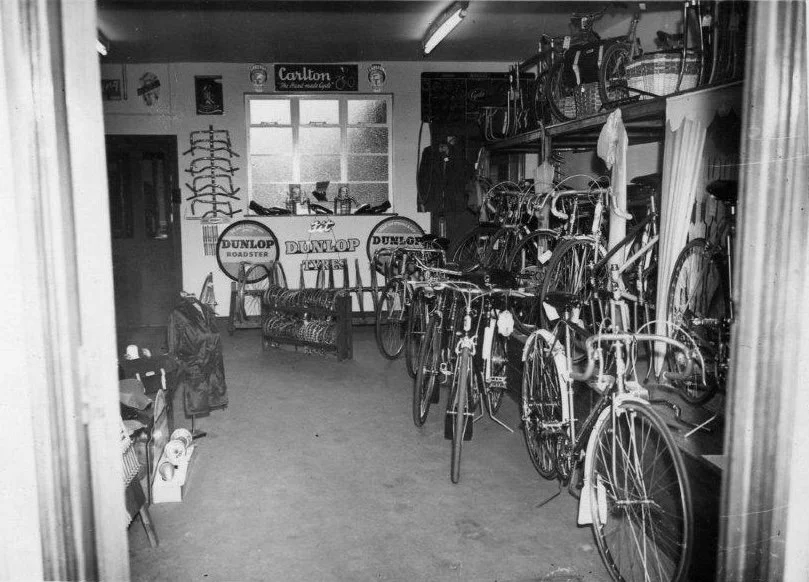
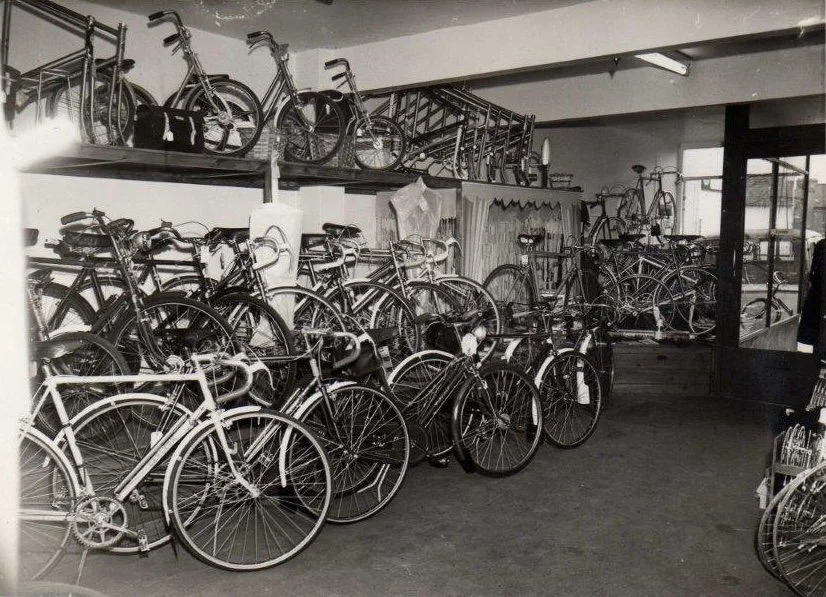
A major event was the all-night ride to Meriden Green, near Coventry for the annual service at the cyclist's war memorial, built in honour of the Cyclist's Brigade from the First World War. During the Second World War Bill served with the 4th Battalion Royal Lincolnshire Regiment in Belgium and Iceland. After demob he had hoped to set up his own cycle shop but there were restrictions on new businesses. However he was offered the cycle dealership of Wm H. E. Smart next door to St Botolph’s Post Office and on June 1, 1946, No 2 High Street became the first specialist lightweight cycle shop in the area. It soon became a popular venue for racing and touring cyclists and was used as a meeting place at the weekends by riders throughout the county.
Bill drew up a training plan which he offered to his clubmates and while racing secretary of the Lincoln Road Club, held the record for Lincoln to Newark and back with a time of one hour 10 minutes and 30 seconds. His best 25-mile time was one hour four minutes and 16 seconds — a time many cyclists would be proud of today. The shop became renowned for first class, quality cycles and equipment with names like Hetchins, Claud Butler, Hobbs of Barbican and Mercian. He employed an old friend, Cecil Smith to carry out repairs in the workshop at the rear of the building. The shop was sold on Bill’s retirement to Ray Inkley who carried on all the old traditions.
Awarded
After retiring from competitive events Bill took on official roles as timekeeper and handicapper. He provided a cup for the rider achieving the best time for the 50-mile time trial, which is still awarded annually by the Lincoln Velo Club. A prize for the fastest lady competitor and a medal for any club member beating his own 25-mile record were also put up. The service of thanksgiving was being held at All Saints’ Church, Branston today. Donations in lieu of flowers will be given to the Care of the Elderly. The funeral arrangements were by Priestley and Cockett of Lincoln.
Maples Cycle Shop Pictured Around 1950